Growth Is No Longer a Straight Funnel From A to B
A funnel helps you map the customer journey, but loops are what make growth self-sustaining.
Penny Đinh · July 08, 2026
Back in the day, everyone talked non-stop about funnels.
You pour as many people into the top of the funnel as possible, a fraction trickles down to the middle, and an even smaller slice converts at the bottom. Logically, funnels aren't wrong. They help businesses map out the customer journey: where people discover you, when they get interested, where they decide to buy, and where they drop off.
But funnels have one massive flaw: they're a one-way street.
You drive traffic, optimize step by step, bump up conversions, and then... drive more traffic. On repeat. If you want more growth, you usually have to throw more budget, more content, more campaigns, more team members, and more effort at the top of the funnel.
That's linear growth.
In the AI era, though, I think the growth narrative is shifting to something else entirely: growth loops.
It's no longer just "How do we get more people in?" It's: Does every user who enters the system generate value that pulls the next user in?
That's the big game-changer.
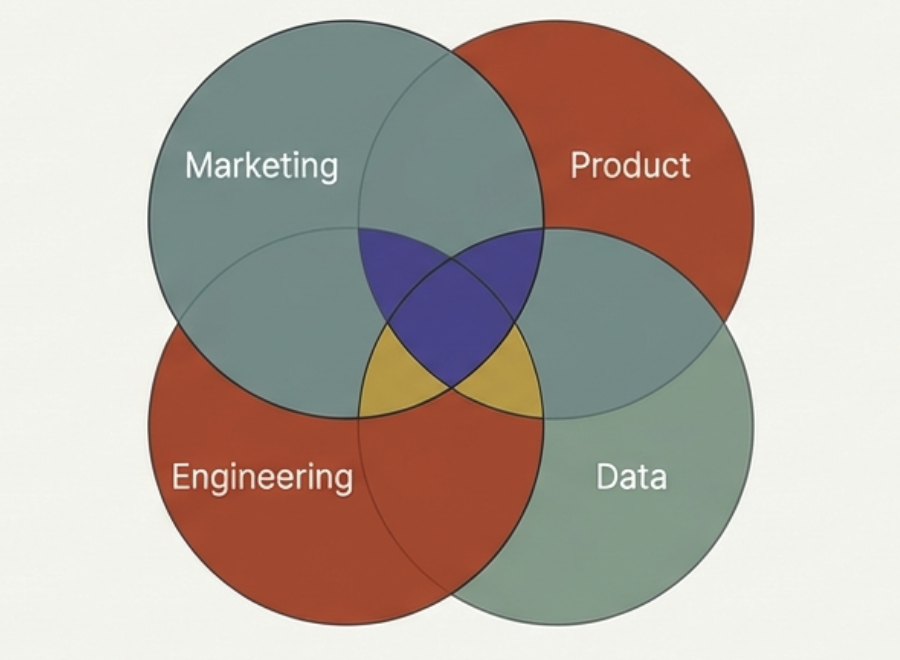
Funnels push users down. Loops empower users to bring in more users
A traditional funnel ends at conversion. A user buys, signs up, fills out a form, books a call, downloads a resource, or tries out a product. After that, the business goes right back to square one: finding new people for the top of the funnel.
Loops work differently.
When a new user enters the system, they use the product, create data, generate content, share their experience, invite others, leave feedback, or produce a great enough output that makes others want in. The user's actions themselves become the fuel for the next wave of growth.
Put simply: in a funnel, the user is the finish line of a campaign. In a loop, the user is a catalyst driving the next campaign.
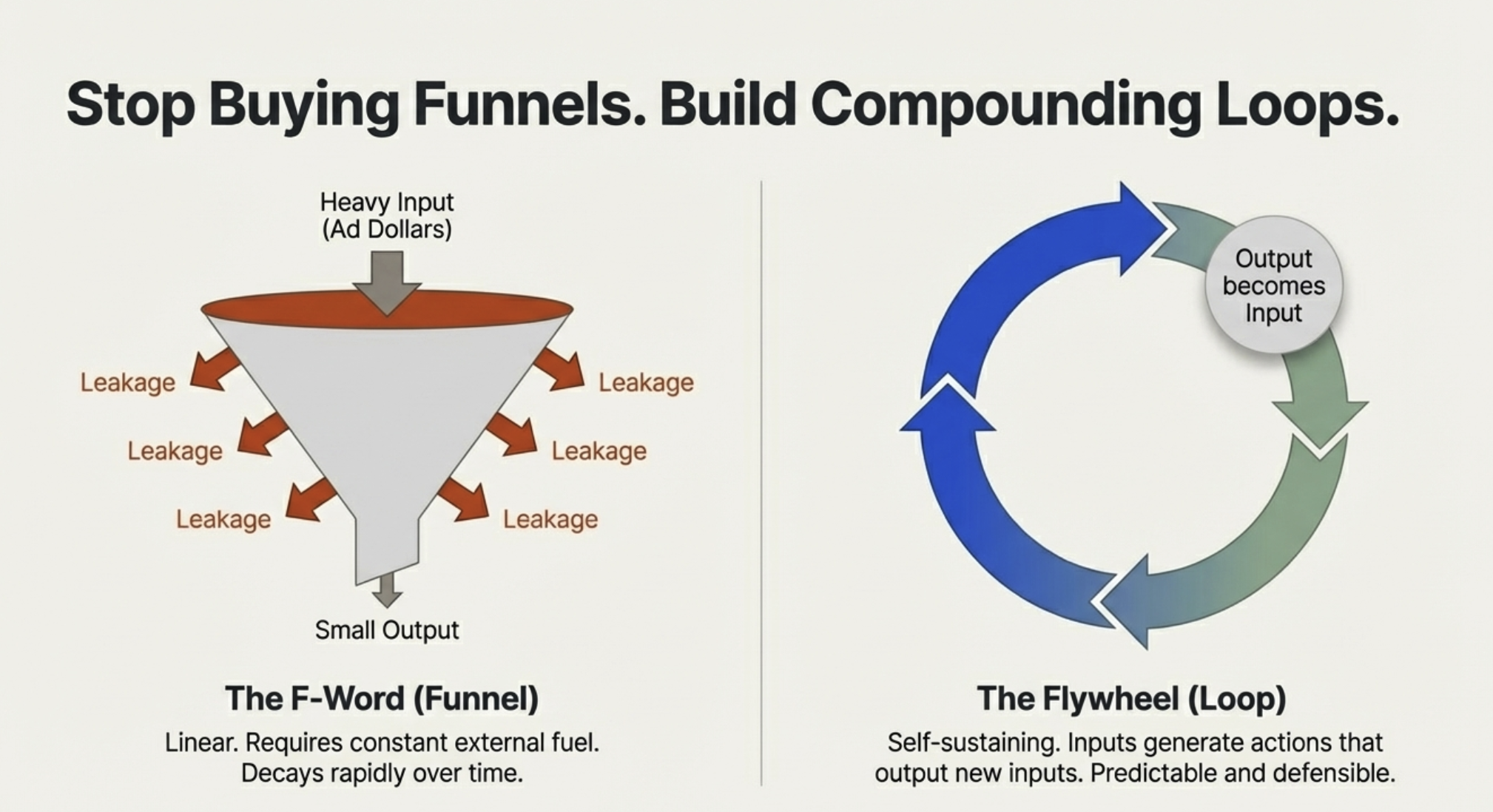
This is why community loops, content loops, referral loops, product-led loops, and AI workflow loops matter so much more now. Growth isn't just about shouting louder, running more ads, or dumping more traffic into the top of the funnel. Growth comes from your product and community creating organic reasons for new people to join.
A user isn't just a customer. They can be a "marketing node"—a key link that spreads the word.
And when that loop is strong enough, growth stops being additive. It becomes compounding.
Experimentation needs to evolve too
If growth changes, the way we test must change too.
In the past, growth teams spent most of their time tweaking micro-details: changing button colors, rewriting headlines, testing copy variations, tweaking onboarding layouts, fine-tuning pop-ups, or adding a reminder email. None of this is wrong. At certain stages, it still has value.
But in the age of AI, if you only focus on surface-level optimization, you'll quickly get left behind.
Because AI products evolve blazingly fast. Workflows change overnight. User behavior shifts constantly. Something that's a core screen today might be obsolete in a few months because users moved to prompts, chat interfaces, automations, or an entirely different workflow.
So the question is no longer: "What button color gives us a 2% conversion lift?"
The bigger question is: what core hypothesis determines whether this product survives or dies?
Do users actually need this? Will they return? Does it deliver good enough outcomes? Will they share it? Are they willing to pay? Does every use make the loop stronger? Is the unit economics sane? Is AI driving real value, or just making the UI look fancy?
Those are the experiments worth prioritizing.
Your first MVP doesn't need to be perfect, but the core must work
I see people falling into two extremes all the time.
On one side, people are overly delusional: thinking AI can do everything, that a few prompts will yield a complete product ready for launch, with no need to understand tech, operations, or actual user needs.
On the other side, people are overly rigid: refusing to launch unless the tech stack is pristine, every line of code is optimized, visuals are pixel-perfect, and every feature under the sun is included.
I think both mindsets miss the point.
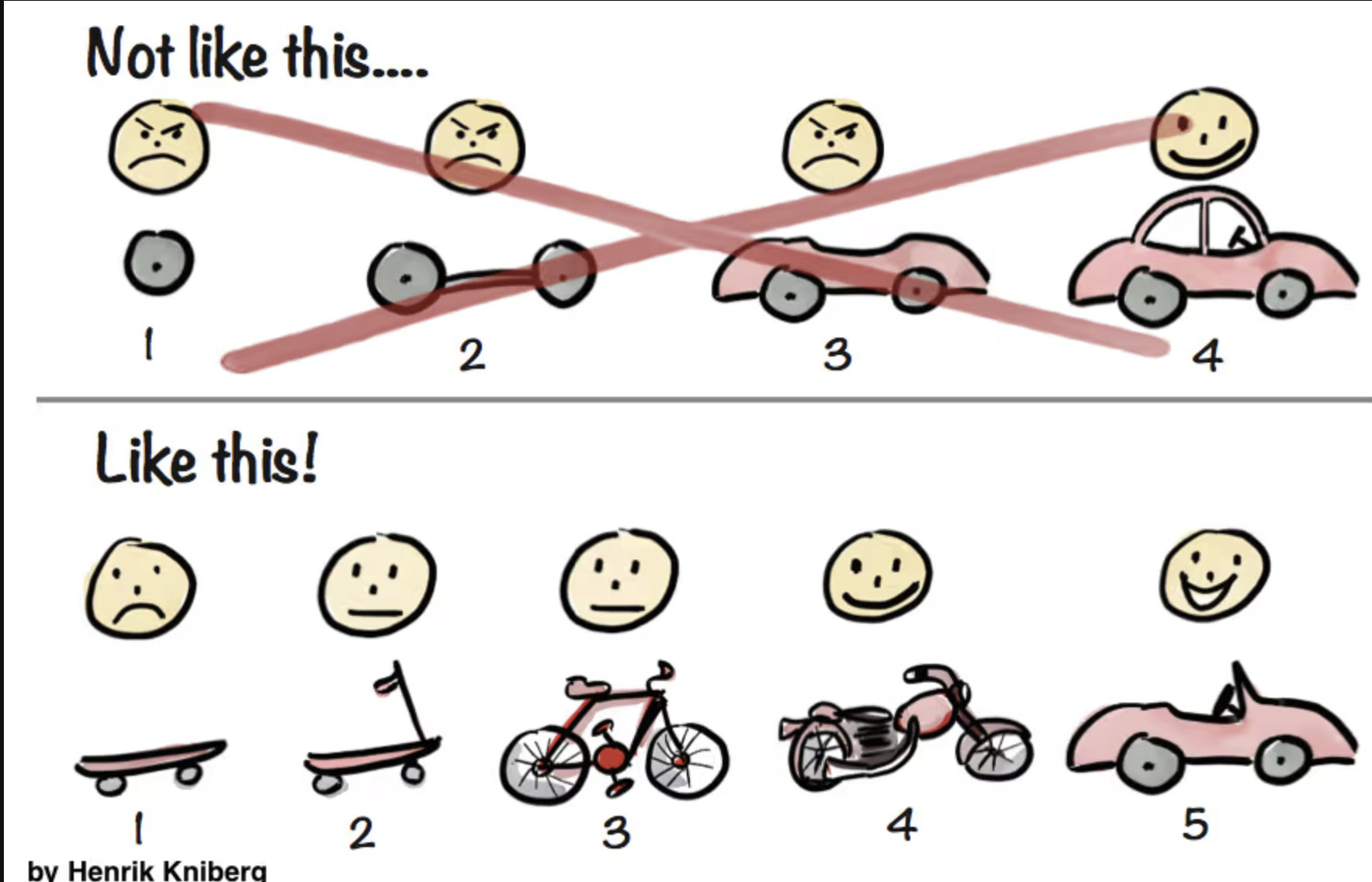
Your initial MVP doesn't need to be perfect. But its core functionality must work.
By "working," I don't mean cleanest, most scalable, or prettiest from day one. I mean users can land, complete the core action, get the core value, and you get real signal from the market.
Visuals can be polished later. Code architecture can be cleaned up later. Secondary flows can be added later. Automations can come later. Friction can be ironed out later.
But the core value must be there from day one.
If your product promises faster video creation, users must be able to create a video. If it promises better lead management, businesses must clearly see leads gathered, categorized, and processed. If it promises time savings, users must actually save time on a specific task.
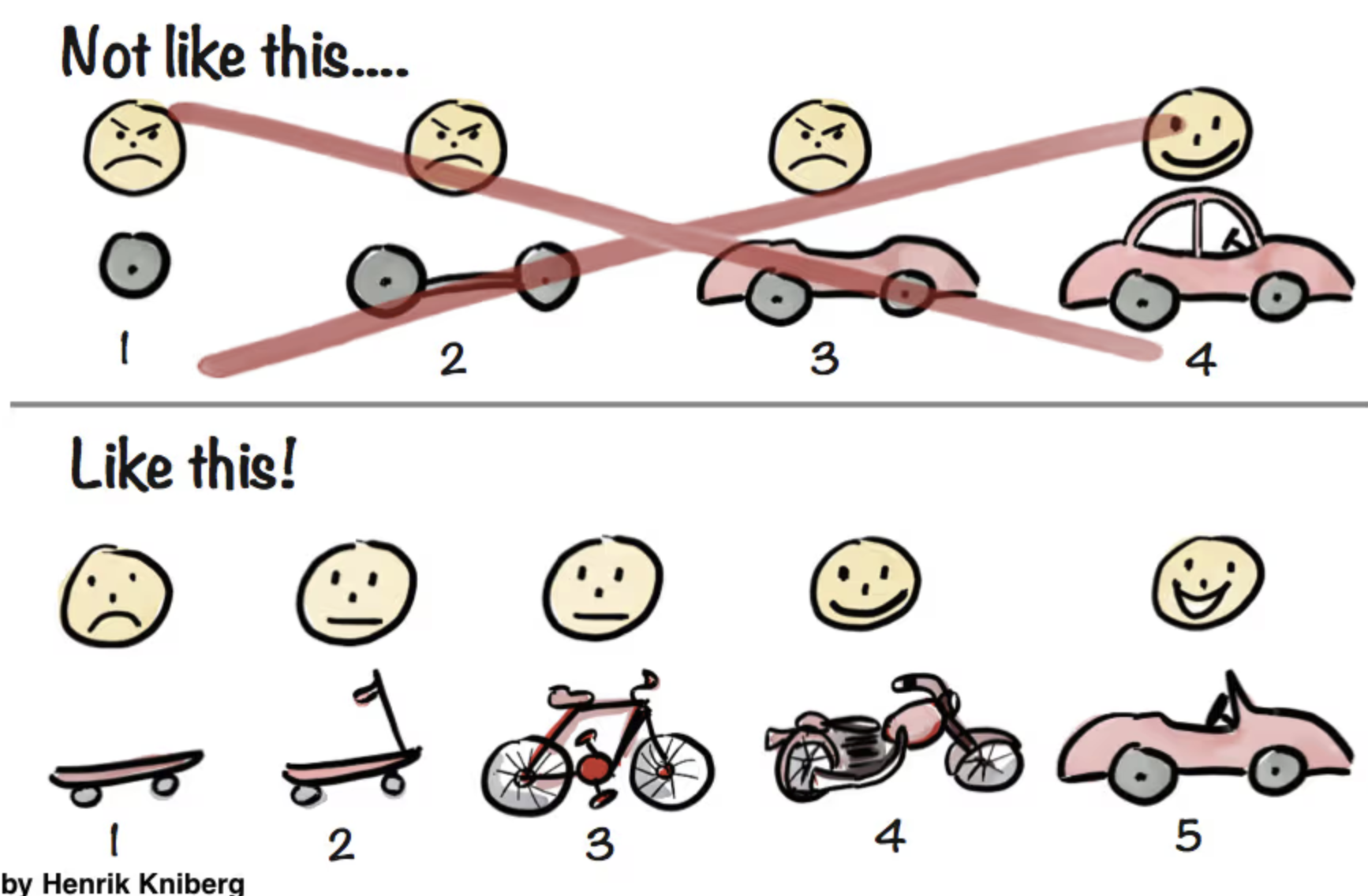
The very first airplane looked nothing like modern jets. But at the very least, it proved it could leave the ground.
Don't wait for perfection before launching
There's a saying I love: nobody built a fully finished airplane on their first attempt.
Building a product is a journey. Growth is a journey. Testing is a journey.
You can't sit in a room, optimize everything on paper, and expect reality to align perfectly when you ship. The market always responds differently than expected.
Features you thought were crucial get ignored. Minor details you overlooked get asked about constantly. User flows that seemed logical to you confuse actual users. Things you wanted to make gorgeous, users just want solved faster.
So from a business standpoint, I believe the play is simple: ship the leanest workable version to market, observe real reactions, and iterate.
This isn't about shipping garbage. It's about launching a version that is clear enough, usable enough, and validated enough to test your core hypothesis.
That's where the real difference lies.
A true MVP isn't a sloppy job. A true MVP is intentionally scope-cut to test the single most important question: does the market actually want this?
AI skeptics don't need to rush to nitpick every technical detail
I get why many engineers are annoyed by the AI hype. There's way too much exaggerated talk out there. Too many shiny demos that crash in production. Too many people slapping together a front end and calling it a product. Too many "build an app with zero coding knowledge" posts.
Flip side, though, I don't think there's any need to ruthlessly nitpick an early-stage MVP's tech stack right off the bat.
Because ultimately, a product doesn't exist to win technical debates. It exists to solve a real problem.
If there's no market demand, elegant code won't save it. But if the market wants it, if real users adopt it, and if demand is proven, there will always be time to refactor code, rebuild architecture, strengthen security, polish UX, scale infrastructure, and hire better talent.
Granted, certain industries have zero margin for error: fintech, healthcare, legal, sensitive data, payments, user privacy. Those require rigor from day one. But not every product needs to launch with banking-grade standards.
The key is knowing what phase you're in.
Phase 1: Validate the problem.
Phase 2: Optimize user experience.
Phase 3: Standardize operations.
Phase 4: Scale.
Don't apply scale-phase standards to crush an idea that's still in validation.
AI-era growth means testing faster, not testing sloppily
AI accelerates product development insanely fast. A single person can spin up landing pages, write copy, prototype, produce content, analyze feedback, and build workflows in a fraction of the time.
But moving faster doesn't mean acting recklessly.
In fact, the faster you go, the clearer you need to be about what you're actually testing.
Are you testing market demand? Messaging? Distribution channels? Activation? Retention? Pricing? Community loops? Are you testing if users share their results, or if the product drives repeat behavior?
Without a clear hypothesis, you'll easily fall into the trap of feeling like you're "doing a lot" without actually learning anything meaningful.
A good experiment doesn't have to be big. But it must answer a crucial question.
And in the age of AI, the edge doesn't just go to who moves fast. It goes to whoever learns fastest from the market.
From funnels to loops: don't just optimize conversions, optimize compounding growth
Funnels still matter. Businesses still need awareness, traffic, leads, conversions, and sales. But if you only think in funnels, you'll constantly be stuck asking: where do we get more traffic this month, how many more ads do we run, what content do we create, how do we pull in more leads?
A loop asks a different question: once a user enters, do they create the conditions for the next user to join?
For an AI product, loops can come from multiple angles.
A user creates a cool output and shares it. Others see it and want to try. The community shares workflows, templates, prompts, and case studies. Every active user generates data that improves the product. Every great result becomes marketing social proof. Every real feedback refines the product. Every successful customer becomes a story that pulls in new customers.
This is where growth moves beyond "pushing messages out." Growth becomes designing a system where value generated by users feeds right back into fueling product growth.
That's a growth loop.
And that's precisely why community is crucial. Community isn't just a broadcast channel for posts. It's where users learn from one another, show off wins, ask questions, give feedback, share use cases, and build a level of trust that paid ads simply can't buy.
Optimize the right thing, not everything
In the AI era, we can optimize practically anything. But not everything is worth optimizing right away.
Some things don't need perfection in v1. Some things look unpolished but still validate real demand. Some technical aspects matter, but aren't the primary bottleneck right now. Other details can wait—what matters most is whether the product actually drives real usage behavior.
This is where business builders need to stay grounded.
Don't polish visuals when the core value is fuzzy. Don't optimize automation before fixing the underlying process. Don't optimize for scale without real users. Don't optimize conversion rates when the messaging is off. Don't optimize funnels if you don't have a loop.
And don't just use AI to make things look faster, smarter, or flashier.
Use AI to shrink your learning cycle.
Ship v1 faster. Get feedback faster. Iterate faster. Test messaging faster. Find your target segment faster. Build loops faster. And once the market sends strong signals, that's the time to dive deep into optimizations.
Conclusion: In the AI era, perfectionists don't win
I don't think the AI era rewards people who wait until everything is perfect before launching.
It rewards those who understand the problem well enough to ship v1 quickly, get it out into the wild, confront real market reactions, and stay sharp about what to optimize next.
Funnels still have value. But relying solely on funnels turns growth into an endless race to buy more traffic.
Loops are what give growth the power to self-sustain.
MVPs still need quality. But they don't need to pretend to be the final product.
Testing still takes discipline. But it's no longer about tweaking micro-details to make dashboard reports look pretty.
AI still requires solid engineering. But engineering shouldn't be an excuse to endlessly delay market validation.
From a business perspective, I think the right question isn't: "Is this product perfect yet?"
The real question is:
Is the core functioning?
Are real users responding?
Does it create a growth loop?
And does every test loop help us learn faster?
Because at the end of the day, growth doesn't come from getting everything flawless on day one.
Growth comes from putting the right thing in front of the market, learning fast enough, optimizing the right friction points, and turning every single user into part of the next loop.