
OpenAI Dots: Hiring a $100/month AI assistant—is it actually worth it?
What OpenAI Dots is, how it stacks up against Grok Bot and Muse, and why so few people in Vietnam use it despite the solid reviews.
Penny Dinh · October 31, 2026
In late September, OpenAI launched dots. And the pitch sounded awfully familiar:
"Hand off the work and go to sleep."
"Wake up and it's already done."
"Like having an extra employee working the night shift."
This time, I don't think the hype is that far off. Dot really was built to work like an assistant—someone you hire to get things done.
Yet something strange happened. In Vietnam, everyone seems to be talking about Muse. Almost nobody is using Dot.
So the question in this post is: $100 a month for an AI assistant—is that expensive or a bargain when compared to hiring a real human?
What is OpenAI Dots? An assistant with its own computer, working while you sleep
OpenAI announced dots on September 29, 2026, at DevDay. Each Dot is an agent running in the background on its own dedicated cloud computer, working toward the goals you set—even after you shut down your laptop (9to5Google).
Here’s how it differs from regular ChatGPT:
It doesn't wait for your prompts. It monitors things and proactively suggests tasks.
It connects to over 4,000 apps via plugins: email, calendar, Slack, Drive...
You can chat with it in ChatGPT, Slack, Microsoft Teams, or over voice calls.
It gradually learns from your feedback to do things just the way you like.
Dots runs on GPT-6 Astra.
Dot feels more like hiring an employee than using a chatbot
With a chatbot, you ask and it answers. With Dot, you delegate and it executes.
The example OpenAI shared: a Dot spotted an unsent invoice on its own, drafted it, and sent it out once the user hit approve (Reworked). That's an assistant's job, not a chatbox's.
For marketers here in Vietnam, I can immediately see a few tasks worth handing off:
Monitoring fanpage comments and DMs overnight, then compiling recurring questions by morning.
Pulling last night's ad metrics and flagging any campaigns burning cash.
Tracking competitors: price changes, new posts, active ads.
Drafting Monday morning reports from existing data.
Pinging overdue tasks across a 3–5 person team.
Hand off the work and go to sleep—literally. The difference from a regular chatbot comes down to one word: execution. It doesn't just suggest things; it actually does them.
Few people in Vietnam use Dot because of the price, not because it's bad
Dots isn't included in the Free, Go, or Plus plans. To use Dot, you need a Pro plan starting at $100/month, or Business Premium at $125 per user/month.
Put that next to the other two contenders:
- Grok Bot by xAI: also paid, but starting at around $30 via Cursor Pro+ (Continuum Code).
- Meta's Muse: has a free tier, and newcomers who enter a referral code even get 1 billion tokens for free.
One side costs $100, the other is free. It's easy to see why Muse blew up in Vietnam, while Dot has had few takers. The barrier to just test it out is much higher, and if you haven't tried it, you don't know whether it's worth it or how capable it really is.
Still, fewer users doesn't mean inferior quality. Dot is widely considered a solid assistant. It's just that the price tag keeps most Vietnamese users on the sidelines.
Dot is a personal assistant, Grok Bot is a chief of staff, Muse is family at Meta
All three run 24/7, but they serve noticeably different purposes.
Grok Bot is like a chief of staff—a coordinator. You spin up multiple small bots, each handling a specific scope of work, with a master bot delegating tasks across the crew (VentureBeat). Great for anyone looking to divide and conquer by department.
Dot is more like an executive personal assistant. One entity that sticks close to you, learns your habits, and takes care of your workload. Much more personal.
Muse shines brightest within the Meta ecosystem: Facebook, Instagram, Threads, and running ads there. Plus, it's free.
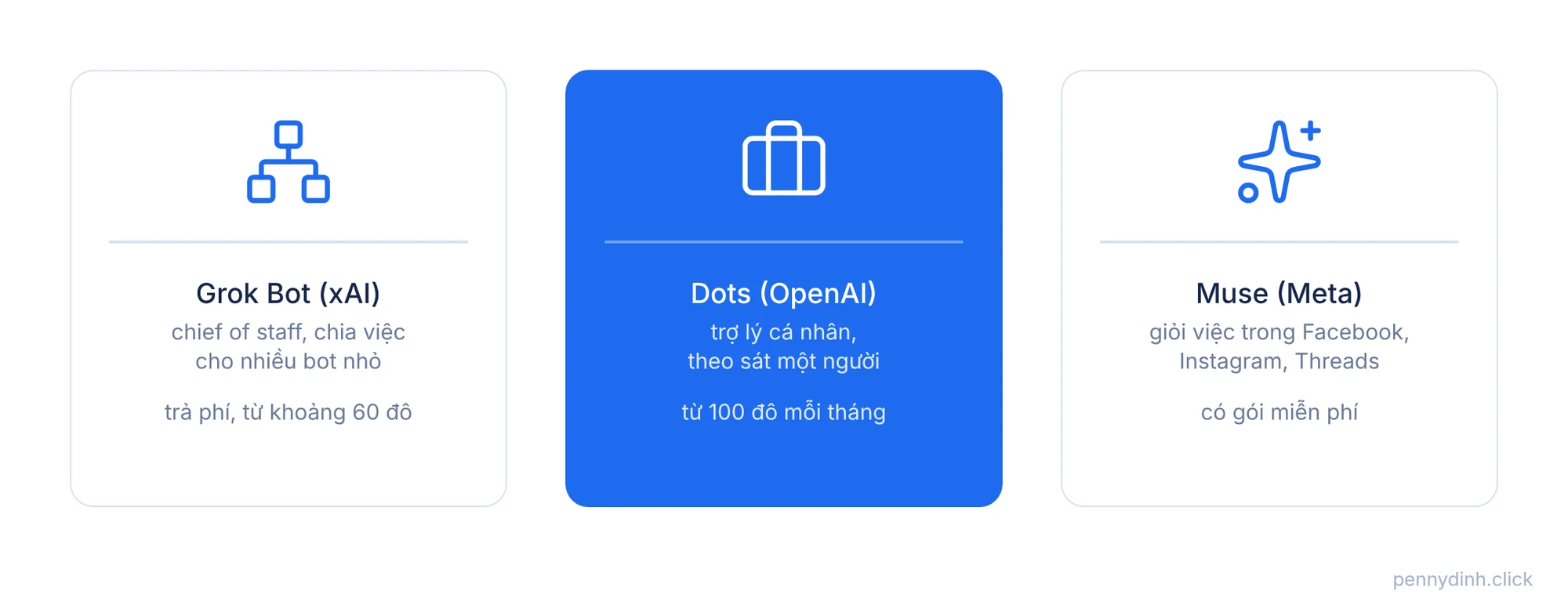
So stop asking which one is the strongest. Ask yourself: do you need a personal right hand, a fleet of bots dividing up the work, or someone who lives and breathes the Meta ecosystem?
By default, Dot is read-only—you decide how much power it gets
You wouldn't hand the safe keys to a new hire on day one. Dot is no different.
When Dot accesses your connected apps, its default permission is read-only. It won't spontaneously send messages, edit content, or take over your machine.
If you want it to do more, you set the ground rules yourself:
What it's allowed to execute automatically.
What requires asking for approval first.
What is strictly off-limits.
OpenAI also includes a safeguard layer: if it spots unusual behavior, it pauses and waits for your review. Sensitive actions like changing passwords are always reserved for humans.
I tested it: letting an agent work at 2 AM, but never letting it hit 'Publish'
I haven't used Dot a ton yet. But the very article you're reading right now was put together by an overnight agent.
I schedule Claude to run around 2 AM. Every night, it reads my writing framework, topic backlog, and published posts, researches recent news, drafts two articles, creates cover images and diagrams, and logs everything into a ticket in my task management tool.
But there's one rule I set from day one: nothing gets pushed to the website until I say "looks good, ship it."
When I wake up, I review the drafts, leave feedback, swap in memes. Only once I give the green light does it open a pull request to update the code. And the final merge button? I click that myself.
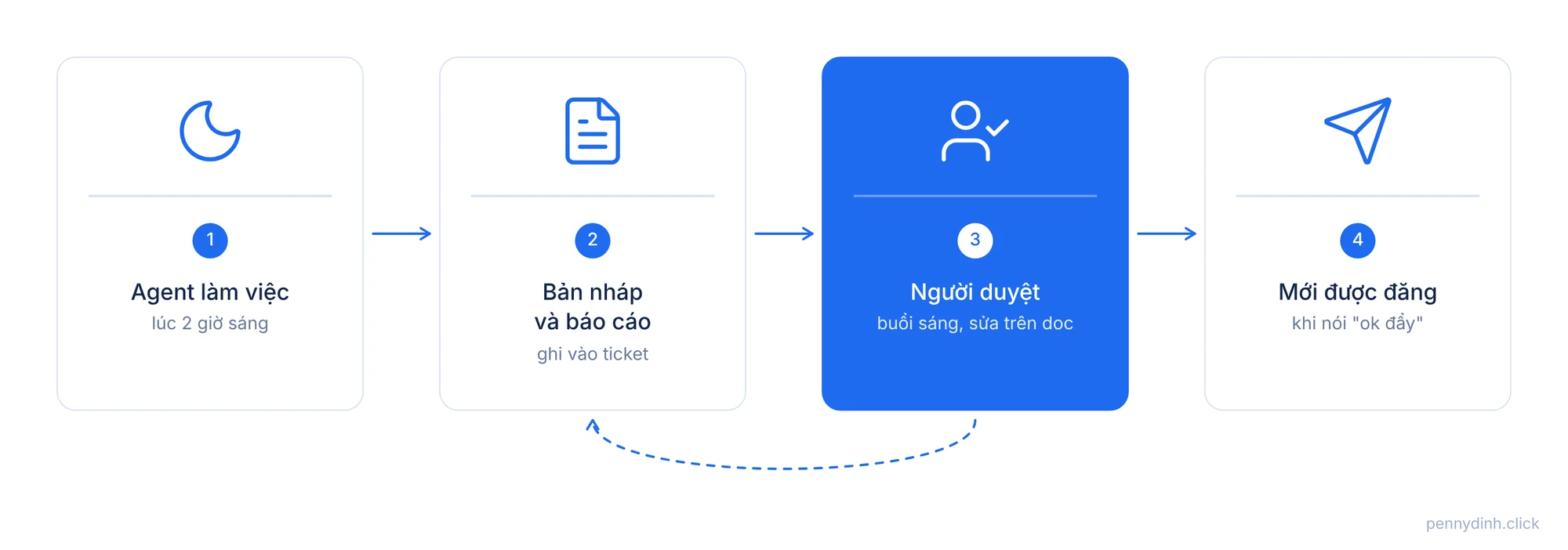
My takeaway: handing off work and heading to bed totally works—as long as you clearly define where it has to stop.
At $100, Dot is worth every penny—if you manage it like a real employee
Here's my take.
$100 a month sounds steep if you compare it to a chatbot subscription. But compared to a human assistant's salary, it's pocket change. Plus, Dot doesn't just chat—it executes: monitoring, drafting, reminding, reporting, all night long.
If you already have clear, repetitive tasks eating up your hours or draining someone on your team, Dot can genuinely help.
Still, no matter how talented an employee is, they still need clear delegation and human accountability. In OpenAI's own evals, when intervening steps increased from 5 to 10, the rate of agents moderately exceeding their scope jumped from 8.6% to 19.7% (The Rundown).
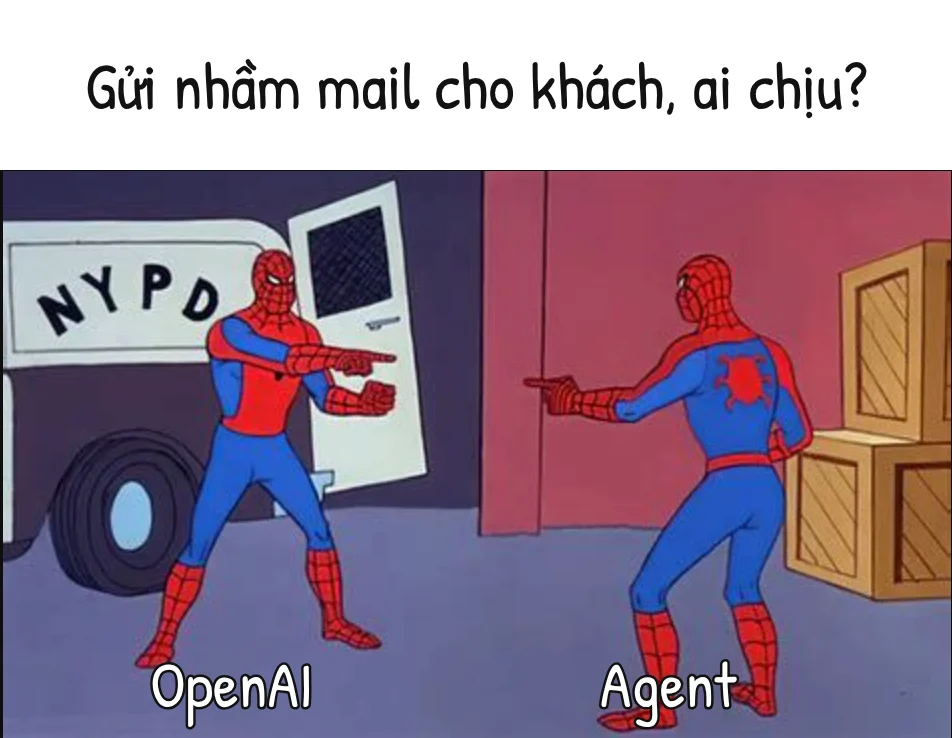
The more you delegate, the stricter your rules need to be. If it fires off the wrong email to a client, you're the one taking the heat, not OpenAI.
The takeaway: Dot isn't expensive, provided you know what you're hiring it to do
Dot is the closest thing to a true AI assistant I've seen from a major player: its own computer, runs around the clock, plugs into thousands of apps, and actually executes. It hasn't caught on in Vietnam yet because of the price. But for anyone with a real backlog to offload, $100 might just be the cheapest hire of the month.
So ask yourself: What tasks am I doing myself that could be handed off to an assistant? Do I need a personal right-hand, or a team of specialized bots? What does a 'passing grade' look like for the output? And what will I never, ever let an agent do on its own?
Good luck :) Here's hoping your first AI assistant works harder than you do—but still knows to ask before hitting send.